
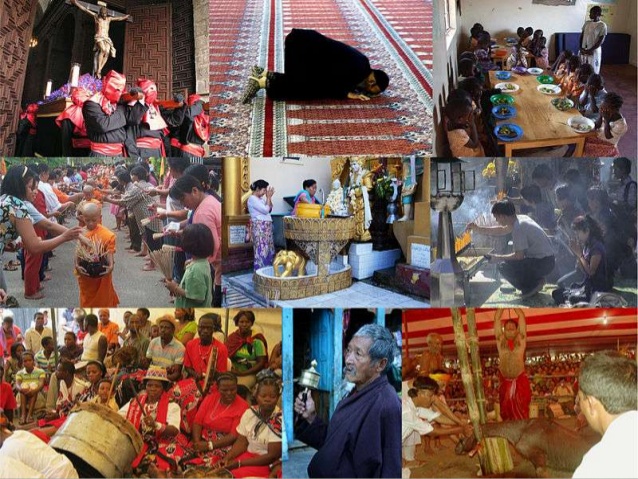
I am a biocultural anthropologist and teach at a university in the southern United States of America. This means that many of my students are religious and haven’t been taught evolution correctly. Students come into my introduction to anthropology, anthropology of science, and epidemiology classes with a scant and incorrect notion of natural selection, and that seems to be all they are exposed to before coming to college. This means I must correct their misconceptions concerning natural selection and situate natural selection among other evolutionary mechanisms.
The purview of this post isn’t to teach you evolution. Instead, I want to share how I frame teaching evolutionary theory to students, many of which shut down cognitively when they hear the word.
I deal with the controversy up front. Before I broadly define evolution, I ask the students what they think about the controversy. They go on to tell me the conflict that exists between religion and science and that God created life.
And while the origin of life is outside the purview of evolutionary theory, we work with this.
I ask the students: “What is the Bible about?” Which is usually met with confused stares as it is a daunting question. This gets the students primed as it indicates that they have never thought about the big narrative of the Bible.
I then ask, “How does the Bible start?” To which they reply: “In the beginning, God created the heavens and the earth…”
“Correct!” I proclaim and ask: “How long is the origin story?” This is where it gets a little tricky because students often reply, “It’s the Book of Genesis.” However, Genesis is much longer than the origin story,y and the creation of the universe is only Chapter 1, which is 31 verses. Depending on the Bible, it is less than two pages. I then ask: “how long is the Bible?” to which they normally reply, “It’s long!”. And it is! Depending on the print and paper size, the Bible is 700-1200 pages long.
Given how long the Bible is, I ask if the Bible is about the creation of life. The students have a hard time answering this question (understandably). We discuss this for some time and conclude that the origin story is about (at most) 0.29% (2/700 pages) of the Bible.
So, can we say this is what the Bible is about? I ask the students: “what happens next?” “Adam and Eve eat the Apple,” they reply. “Yes, Adam and Eve eat the fruit of the tree of knowledge of good and evil.”
And what happens here? Genesis has two origin stories, but the one of most importance is this: By eating the forbidden fruit, the Bible tells the story of the origins of morality.
Before Adam and Eve eat the fruit, they are immoral; that is, they have no morality, and there is no sin. Before this moment, they were innocent, but “then the eyes of both were opened…” (Genesis 3:7). From that point forward, there is no going back to immorality. One can be moral or immoral, good or bad.
This story tells the tale of where morality comes from, and the rest of the Bible is a series of stories (whether true or fables) to comment on how to live a good life and what happens if you don’t.
Less than two pages of text versus >700 pages.
Now, what is the purview of science (they should already be familiar with this, as before we talk about anthropology, we talk about the nature of science). Science is concerned with generating the most accurate descriptions and explanations of the natural world.
“Are questions of morality scientific questions?”
“No,” the students reply.
“Is God natural or supernatural”
“Supernatural”.
“So are questions about God or morality within the purview of science?”
“No”
But it doesn’t end here. I am an anthropologist and take cultural relativism seriously as a method for coming to understand people (past and present).
“Well, the Bible doesn’t mention anything about evolution, genes, organisms changing over time, etc.”. And that is correct. But holding a culture to modern standards, standards that include the invention of science and all of the data and evidence that has been collected over history, is unfair and ethnocentric. It is unreasonable to hold a culture of >2000 years ago to our standards today, especially regarding our understanding of the natural world.
The narratives of the Bible should be understood relative to the time and place they were written using the language, beliefs, and understandings of the time as a means of orienting the reading. This is what theologians and anthropologists do.
We then discuss the conflict between science and religion as an American phenomenon and not every religious nation has the same conflict (See: Gould’s non-overlapping magisteria).
Finally, we discuss why society needs to understand, study, and use evolutionary theory. It isn’t necessary for everyone to be experts, but some people must (i.e., antibiotic-resistant infections, cancer, etc.). I ask the students, “Who drives a car?” and then, “Does anyone understand all the chemistry and physics of a combustion engine?” Everyone drives, and no one understands all of how engines work. “Right! But you can take full advantage of all the benefits of the science that went into the engine without being an expert! The same is true for evolution. As long as you have a passing understanding and experts are actively engaging, you can take advantage of all the benefits without being an evolutionary biologist!”
From this point, students tend to have no problem being attentive and learning evolutionary theory. We cover natural selection, niche construction, heritability, sex, sexual selection, artificial selection, gene flow, genetic drift, and how they all relate together as one continuous process.


 Anthrop 365
Leave a reply to Mary Britton Cancel reply