race
-

Edward Said published Orientalism in 1978 and is highly influential in postcolonial studies and social theory. Said argues that through the construction of the ‘Orient’ (the East) and the other, the ‘Occident’ (the West) defines itself. Western representations of the Orient are merely a pseudo-intellectual endeavor of justifying and exalting its own existence instead of a sincere…
-
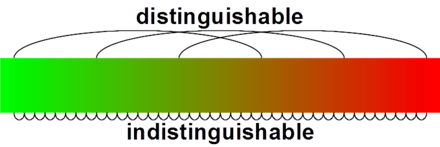
The sorites paradox (also called the paradox of the heap) refers to a particular logical contradiction that arises from the analysis of vague terms (Sainsbury, 2009). Terms like ‘heap’, ‘bald’, and ‘tall’ all fall into this category. We know a tall or bald person when we see one, but what are the necessary and sufficient…
-

Race, as a concept, has an important ontology in American society. In order to understand the relationship between race, genetic research, and the American class structure, it is necessary to first understand the historical production of race. The following section does not intend to be a comprehensive history of race but merely highlights trends in…
-

You Shall Know Them (1953), or Les animaux dénaturés in the French, is a novel by Jean Marcel Bruller under the pseudonym Vercors. He is most famously known for The Silence of the Sea (1942), which explores the experience of a French family and a German occupying officer who attempts to convince the family of…
-

Intro to Anthropology (ANTH 1101-006) UNC Charlotte, Spring 2018 Mon/Wed (11:00-12:15pm) in CHHS 380 Instructor: Adam Johnson Office Hours: T/TR 11:00-12:00pm ajohn344@uncc.edu by appointment in Hickory 42B This syllabus contains policies and expectations I have established for this course. Please read the entire syllabus carefully and refer to it regularly throughout…
-

Science Studies (LBST 2213-015) UNC Charlotte, Spring 2018 Tues/Thurs (2:00-3:15pm) in Kennedy 236 Instructor: Adam Johnson Office Hours: T/TR 11:00-12:00pm ajohn344@uncc.edu by appointment in Hickory 42B This syllabus contains policies and expectations I have established for this course. Please read the entire syllabus carefully and refer to it regularly throughout the…
-

Social institutions such as healthcare and education have been examined through a lens of structural violence— the systematic ways by which social institutions place certain members at a disadvantage thus causing various types of harm. However, science has escaped such scrutiny. In a post-colonial world, new forms of colonisation have taken the place of traditional…
-
Mary Douglas defines ‘dirt’ as “matter out of place.[1] In revisiting her work in the context of my current research and the protests of professional athletes, it made me consider this definition, its implications, and the lengths to which we go as a society to “reorder” the world and cleanse. “Dirt offends against order. Eliminating…
-

Is Science Racist: Debating Race, by Jonathan Marks- Professor of Anthropology at the University of North Carolina at Charlotte, was released in the midst of a societal reexamination of the pervasiveness of and value ascribed to race in America. As a new generation is being reacquainted with racial disparities that have existed in perpetuum in the…
 Anthrop 365