-
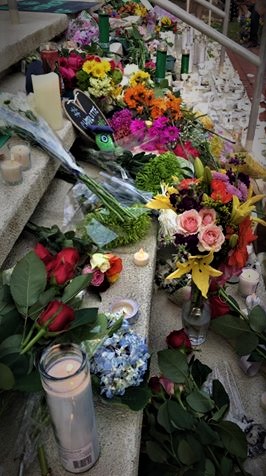
On April 30, my Liberal Studies class, framed as Anthropology and Philosophy of Science (Syllabus), was the site of a horrific event. Two of my students were killed, while four more were injured. I will not share their names as to protect them, although that information is available elsewhere. I will use broad terms or…
-
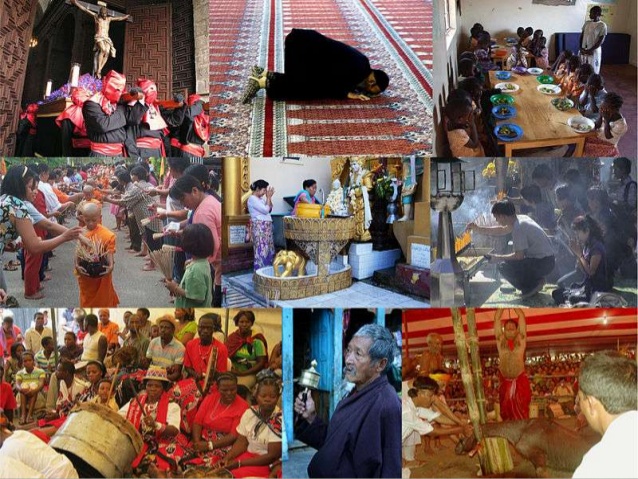
I am a biocultural anthropologist and teach at a university in the southern United States of America. This means that many of my students are religious and haven’t been taught evolution correctly. Students come into my introduction to anthropology, anthropology of science, and epidemiology classes with a scant and incorrect notion of natural selection, and…
-

As you are likely aware, there is a huge college admissions scandal that has been brought to life. Forbes calls it “The Worst Crime In College Admissions History Exemplifies The Worst Parenting“. Affluent parents are bribing their children’s way into prestigious universities, falsifying records and SAT scores, faking athletic performance, etc. Much of the light…
-

One of my passions is studying multispecies entanglements. As an anthropologist, the ways in which human activities affect the lives of other living organisms are of central interest, but the ontological relationships of other organisms go deep. A few weeks ago, I was having a conversation with my partner (who is a gender scholar), and…
-

After each semester, I evaluate what did and didn’t work in my classes. I didn’t teach Introduction to Anthropology for Fall 2018, so I had an extra semester to think about what I wanted to do with the course moving forward. I have decided to move on from using a textbook (despite the fact that…
-

Intro to Anthropology (ANTH 1101-001) UNC Charlotte, Spring 2019 Mon/Wed/Fri (10:10-11:00am) in Rowe 161 Instructor: Adam Johnson Office Hours: M/W 12:30-1:30pm ajohn344@uncc.edu by appointment in Barnard 244A This syllabus contains policies and expectations I have established for this course. Please read the entire syllabus carefully and refer to it regularly throughout the semester. Course Description…
-

We all have texts that are formative in our academic, professional, spiritual, personal, mental, and philosophical lives. There are a few books that I can point to as turning points in my intellectual life. For example, Orientalism by Edward Said, Le Suicide by Émile Durkheim, Purity and Danger by Mary Douglas, Why I’m Not a Scientist by Jon Marks are all…
-

I woke up this morning to the news that Senator Elizabeth Warren has released a DNA test “providing strong evidence” that she has a Native American ancestor 6-10 generations ago (I’ll unpack that later). While I appreciate Senator Warren’s take-down of banking executives and much of her politics, this is a misguided tug-of-war with Trump.…
-

Edward Said published Orientalism in 1978 and is highly influential in postcolonial studies and social theory. Said argues that through the construction of the ‘Orient’ (the East) and the other, the ‘Occident’ (the West) defines itself. Western representations of the Orient are merely a pseudo-intellectual endeavor of justifying and exalting its own existence instead of a sincere…
-
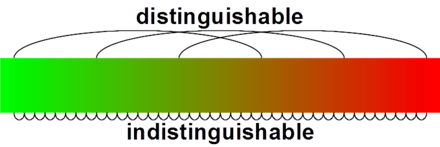
The sorites paradox (also called the paradox of the heap) refers to a particular logical contradiction that arises from the analysis of vague terms (Sainsbury, 2009). Terms like ‘heap’, ‘bald’, and ‘tall’ all fall into this category. We know a tall or bald person when we see one, but what are the necessary and sufficient…
-
Subscribe
Subscribed
Already have a WordPress.com account? Log in now.
 Anthrop 365